Bible-Daily Bible Verse
- 4.8
- Rating
- 10.00M
- Installs
- Free
- Price

 Analysis by App-foxy
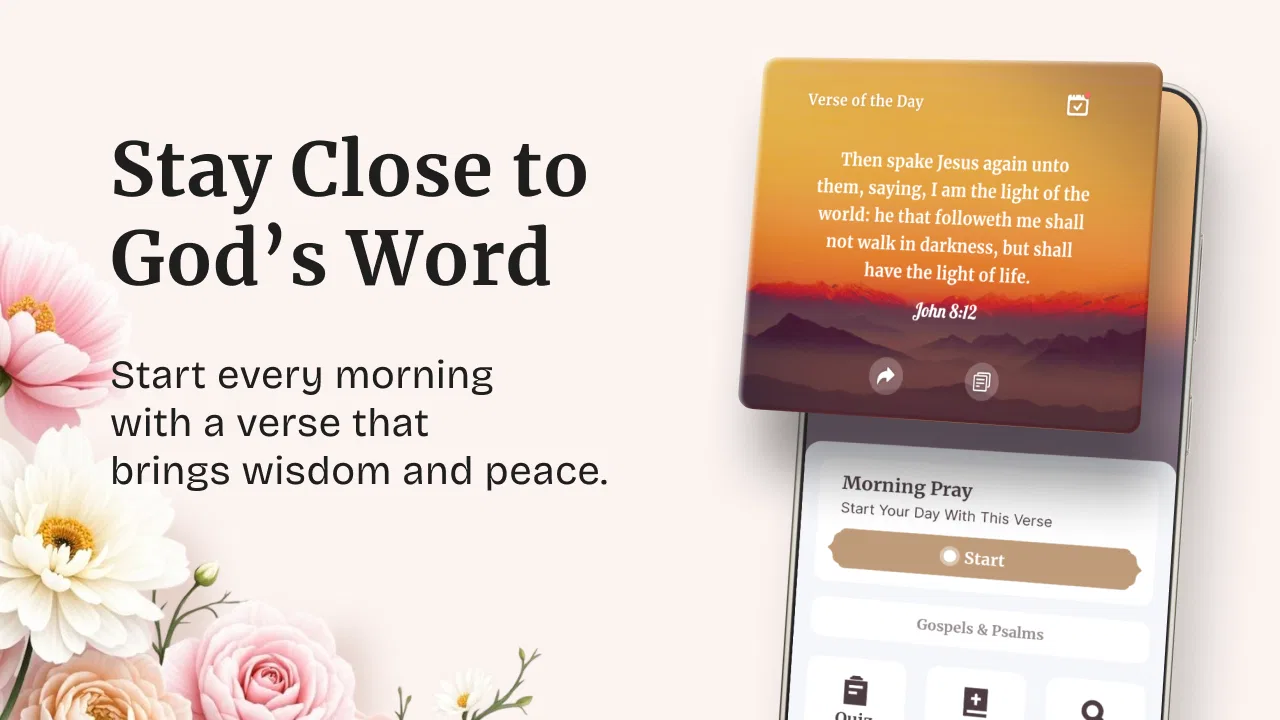
I approached Bible-Daily Bible Verse as someone looking for a simple way to keep Scripture close during an ordinary day, rather than as a replacement for a full study library. This free Books & Reference app from Bíblia Offline combines Bible reading with audio, a verse of the day, and devotional material. That mix makes its first impression easy to understand: open it when you have a few quiet minutes, read or listen, and leave with one passage to think about.
My overall experience is positive because the app does not demand a complicated routine before it becomes useful. A first-time user can begin with the daily verse, then move into longer reading when the moment feels right. The important distinction is that this is more approachable than a scholarly Bible tool. It is aimed at regular contact with Scripture, personal reflection, and convenient listening. If that is what you want, the design makes sense. If you need advanced comparison tools, extensive academic notes, or a highly customizable study workspace, I would look elsewhere.
What to expect when you open the app
The app’s central idea is repetition in the best sense: return often, read something focused, and gradually build a habit. The daily verse gives a clear starting point instead of leaving a new user staring at a large list of books and chapters. Devotionals add a little more context for moments when a single verse feels too brief, while the audio book option changes the experience from screen reading to listening.
You May Also Like

 Blood Strike: 2.5 Anniversary
Blood Strike’s Loadouts Turn Every Drop Into a Tactical Gamble
A close look at Blood Strike’s custom loadouts: how fast access to signature weapons reshapes its battle royale rhythm, rewards preparation, and narrows the gap between fights.

 Pandora - Music & Podcasts
Pandora’s Music Is Easy to Start, but Harder to Recover
Pandora’s strength is its low-effort path from a seed to a station. Its weak spot is how much confidence it asks you to place in connection, setup, and quiet recovery.

 8 Ball Pool
 Is Built on Rivalries, Rematches, and Routine
A close look at the rivalries, rematches, shared routines, and unanswered safety questions that turn a quick pool match into a persistent mobile community.

 Samsung Music
’s Quiet Strength Is Playing What You Already Own
Its reach comes less from spectacle than from dependable access to a personal library. That simplicity is both the app’s strongest retention engine and its ceiling.

 AccuWeather: Weather Radar
AccuWeather Review: A Quick, Clear Forecast for Everyday Decisions
For everyday plans, the best forecast is the one you can understand quickly. AccuWeather makes rain timing, radar, and local conditions easy to act on, with a few trade-offs.

 Hill Climb Racing
Why Hill Climb Racing Still Turns Crashes Into One More Run
A tiny car, a bumpy hill and one more upgrade: Hill Climb Racing keeps resurfacing because its simple chaos makes every near-miss feel personal.
More From Our News Desk



I like that these elements serve different situations. The verse of the day suits a short morning pause. A devotional can work better when I want guidance for a longer reflection. Audio is useful when my eyes are occupied, such as during a quiet walk or while doing a simple household task. The app therefore feels less like one fixed reading mode and more like a small set of entry points into the same subject.
The developer is Bíblia Offline, and the app sits comfortably in the familiar space of Christian reading and reference tools. Its store short description is simply “Bible Verse,” but the actual appeal is broader: the daily verse is only the quickest doorway into reading, listening, and devotional use. I would not install it expecting a social network, a general ebook reader, or a broad religious reference encyclopedia. Its purpose is narrower and more personal.
Its popularity is also reassuring for someone hesitant to try a lesser-known reading app. It has passed 10 million installs and holds a 4.8 average from around 462 thousand ratings. Those figures do not guarantee that every screen will suit every reader, but they suggest that the basic idea has connected with a large audience. The app is free to install, which makes it easy to test without committing money at the beginning.
There is one practical detail worth keeping in mind before settling into it. In-app purchases range from $0.99 to $49.99 per item. I would treat the free experience as the starting point and pay attention to what is offered inside the app before purchasing anything. That is especially important if you prefer a completely uncomplicated reading tool and do not want optional extras to influence how you use it.
The right expectations for a first session
A useful first session does not need to involve reading a long section. I recommend opening the verse of the day, reading it once without rushing, and then using the audio option to hear the passage if that suits your attention better. Afterward, open a devotional and see whether its style helps you reflect or feels more guided than you prefer. This small test tells you much more about the app than browsing every available screen.
For me, the strongest quality is reduced friction. I do not have to decide which enormous study project to begin. I can start with one verse, continue only if I want to, and return later without feeling that I abandoned a complicated plan. That makes the app a good fit for beginners, busy readers, and people trying to rebuild a daily habit after a long break.
Setting it up without overcomplicating the experience
The application supports devices running Android 7.0 or later, so it is accessible on many older Android phones as well as newer ones. After installation, I would first look around the main reading area rather than immediately changing every available preference. The goal is to identify three things: where the daily verse appears, where the devotional content is reached, and how to start audio.
This simple orientation matters because a Bible app can feel intimidating when it presents many books and chapters at once. A first-time user may assume that successful use requires understanding the entire navigation structure. In this case, I found it more helpful to treat the daily verse as the home base. Once that feels familiar, the longer Bible-reading route becomes less confusing.
If you prefer listening, test the audio early instead of saving it for later. Audio changes the way the app fits into a routine, and it is better to discover your preferred pace at the beginning. I would also keep the first listening session short. A few minutes are enough to decide whether the narration and controls feel comfortable for you. Someone who mainly wants silent reading may not care about this, but an audio-first user should make it part of the initial check.
Another useful setup habit is to decide when the app belongs in your day. I would not rely on opening it randomly and hoping a routine appears. Put the verse beside an existing habit: after making coffee, before commuting, or during an evening wind-down. The app’s content is designed for repeat visits, but the habit still has to come from the user. Its simplicity helps; it does not remove that personal decision.
Because the age rating is Everyone, the app is presented as suitable for a broad audience. That makes it reasonable for households with different ages and levels of familiarity with Bible reading. Still, suitability is not the same as identical usefulness. A child, a new reader, and someone doing detailed theological research may all open the same app but need different depths of explanation and different reading approaches.
My recommended first-use path
Begin with the daily verse rather than searching through every book immediately.
Read the passage silently, then try the audio option if listening is part of your routine.
Open a devotional and judge whether it adds helpful reflection to the verse.
Choose one repeatable time of day for returning to the app.
Only after that, explore longer reading sessions and any optional paid material.
This order prevents a common beginner mistake: turning a potentially calming app into another project to organize. I would rather leave the first session with one meaningful passage than spend it adjusting settings and collecting features. Bible-Daily Bible Verse works best when the app remains a doorway to reading, not the subject of the whole session.
The first meaningful success: turning one verse into a routine
The first successful action I would aim for is not finishing a chapter. It is reading one verse carefully and connecting it to a real part of the day. For example, imagine opening the app before work when you have only a few minutes. You read the daily verse, listen to it once, and then carry one phrase with you while handling the morning rush. That is a realistic win because it uses the app’s strongest feature without requiring a large time commitment.
On a quieter day, I would extend that same process. Read the verse, open the related devotional material, and note the question or idea that stays with you. The point is not to force a dramatic emotional response. A useful devotional app can simply help me pause, notice a theme, and return to it later. This makes the content more practical than a verse that disappears as soon as I close the screen.
Audio is particularly valuable in this workflow because it offers a second pass without making the experience feel like more screen time. I might read first for focus and listen afterward for a different rhythm. That is a small but non-obvious advantage: changing the format can help a familiar passage feel newly attentive, even when I am not adding more material.
A second useful workflow is to use the app at two different speeds. During the week, keep the daily verse as the minimum routine. At the weekend, use the devotional and audio options for a longer session. This avoids the all-or-nothing pattern that causes many reading habits to fail. Missing an ambitious plan can feel discouraging; maintaining a small daily contact and expanding when possible is more sustainable.
I also recommend resisting the urge to treat the daily verse as the whole Bible. A selected verse is a prompt, not always a complete argument or narrative. When a passage raises questions, move into broader reading rather than drawing a conclusion from one isolated line. The app’s value increases when the short daily entry encourages deeper reading instead of replacing it.
Where the experience is strongest
The combination of verse, devotional, and audio content gives the app a useful range without making the first step difficult. Someone new to Bible apps can start small, while a regular reader can change formats according to the day. I especially appreciate this flexibility for people who alternate between visual reading and listening. Many ordinary alternatives focus heavily on one mode, whereas this app makes the transition part of its identity.
It is also a sensible companion for readers who do not want to carry a physical Bible everywhere. A phone is already part of most daily routines, and a focused reading tool can be easier to reach than a larger book. That convenience has a trade-off, of course: the same phone contains distractions. I would use the app with notifications and unrelated interruptions kept as low as practical, because the quality of the pause depends partly on protecting it.
The current version is 1.8.7, and the app has been available since September 5, 2022. Those details place it as an established Android app rather than a brand-new experiment. For a first-time user, that matters mainly because the product has had time to develop its basic identity. I would still judge it by how naturally its reading and listening flow fits my own habits, not by version numbers alone.
Common confusion and the limits I noticed
The first possible confusion is the difference between a daily verse and structured Bible study. The app can support study, but its most immediate design encourages short, guided contact. If you want parallel translations, extensive cross-references, original-language tools, or a research-oriented note system, a dedicated study Bible app will probably serve you better. Choosing this app for those advanced needs may leave you wishing for controls it was not designed to prioritize.
Another point is the role of devotionals. They can make a verse easier to approach, but readers do not all want the same interpretive voice. I would treat devotional writing as a companion for reflection, not as the only way to understand a passage. If you prefer to form your own interpretation first, read the Scripture before opening the devotional. That simple order preserves more independence.
Audio also has a specific trade-off. Listening is convenient, but it is less precise than reading when I need to stop, compare wording, or examine a particular sentence. I would use audio for immersion and repetition, then switch to the text when a detail deserves closer attention. This two-mode approach is more effective than expecting audio alone to handle every kind of study.
The free price is a strong reason to try the app, but optional purchases deserve a deliberate approach. I would not buy anything during the first session. First establish whether the daily verse, devotional material, and audio experience are genuinely useful to you. After several visits, you will have a better basis for deciding whether any paid item adds enough value to justify its cost.
Some users may also expect the word “offline” in the developer name to mean that every part of the experience behaves exactly like a downloaded reference book. I would avoid making that assumption without testing the particular content I need. For a dependable routine, try the passages and audio you plan to use in the circumstances where connectivity may be limited. That practical check is more useful than relying on an expectation about the app’s identity.
There is a further limitation for readers who want extensive personalization. A focused devotional app can feel refreshingly uncluttered, but it may seem restrictive beside platforms built around highlights, community discussion, elaborate plans, or deep annotation. I would choose Bible-Daily Bible Verse when I want a calm, direct path to Scripture. I would choose a larger study platform when organizing research is the main purpose.
Who should install it, and who should skip it
I would recommend it to a beginner who wants a gentle first step, a busy reader who needs a short daily entry, and anyone who appreciates switching between text and audio. It is also a good candidate for someone returning to Bible reading after a long pause, because the daily verse removes the pressure of deciding where to begin.
I would be more cautious if your priority is academic study, detailed personal annotation, or comparing many versions side by side. In those cases, the usual alternatives in the Bible-reference category may offer a more suitable workspace. I would also skip it if you dislike guided devotional material or have no interest in audio, since two of its distinguishing elements would then matter less to you.
For families, the Everyone rating makes the app broadly approachable, but I would still encourage adults to help younger readers place individual verses in context. The app can open the conversation; it should not be expected to replace discussion, teaching, or a complete reading plan.
My next-step recommendation after the first week
After several days, I would review the routine rather than simply counting how often I opened the app. Ask yourself whether the daily verse is helping you pause, whether audio improves your concentration, and whether devotionals deepen your reading or feel unnecessary. Those answers identify the best way to use the app. There is no need to use every part just because it is available.
My preferred progression is gradual. Keep the daily verse as the anchor, add audio on days when reading is inconvenient, and use devotionals when you want a little more reflection. When a verse catches your attention, continue into the surrounding reading instead of staying with the isolated selection. This creates a more balanced habit and protects against treating short inspirational content as a substitute for broader Scripture.
Compared with a paper Bible, the app is quicker to access and more adaptable to listening, but it is also easier to interrupt with phone distractions. Compared with a large study app, it feels less demanding and more welcoming, but it is not the choice I would make for research-heavy work. Compared with a simple verse widget or quote feed, it offers a fuller path through reading, audio, and devotionals. That middle position is where it makes the most sense.
My honest recommendation is to start free, keep the first session small, and judge the app by whether it helps you return tomorrow. The best result is not exploring every option or purchasing extras; it is finding a repeatable moment in which one passage receives your attention. For that purpose, Bible-Daily Bible Verse is a thoughtful and accessible choice.
With its broad Android compatibility, Everyone rating, free entry point, and strong reception from more than 10 million installs, it is easy to try without much risk. Just keep its role clear. This is a practical companion for daily Bible contact, audio listening, and devotional reflection—not a complete replacement for every specialized study tool. Used within those boundaries, it can become a quiet, useful part of an ordinary day.
FAQs for Bible-Daily Bible Verse
01What features does the Bible-Daily Bible Verse app offer?
The Bible-Daily Bible Verse app provides users with daily inspirational Bible verses, multiple translations, and verse sharing options. It includes a personal journal for reflections, customizable notifications, and offline access. Users can also explore various Bible reading plans and devotionals tailored to personal spiritual goals.
02Is the Bible-Daily Bible Verse app free to use?
Yes, the app is free to download and use. However, it may offer in-app purchases for premium features such as ad-free experiences, exclusive reading plans, or additional translations. Users can choose to upgrade based on their preferences and needs.
03Can I use the Bible-Daily Bible Verse app offline?
Yes, the app allows offline access to previously downloaded Bible verses and reading plans. This feature is particularly useful for users who wish to continue their daily devotionals without needing constant internet connectivity, making it convenient for on-the-go usage.
04How can I customize my daily Bible verse notifications?
Users can customize notifications by setting specific times for receiving daily Bible verses. The app offers flexibility in choosing the frequency and style of notifications, allowing users to tailor their experience according to their daily schedule and spiritual routine.
05Does the app support multiple Bible translations?
Yes, the app supports a variety of Bible translations, including popular versions like the King James Version (KJV), New International Version (NIV), and more. Users can switch between translations to enhance their understanding and interpretation of the scriptures.
Pros
- Daily reminders to encourage reading.
- User-friendly interface for easy navigation.
- Offline access to verses available.
- Customizable themes for personalization.
- Includes study tools like commentaries.
Cons
- Ads can interrupt reading experience.
- Limited translations in some regions.
- No audio option for verses.
- Requires account for full features.
- Occasional app crashes reported.

Bible-Daily Bible Verse
Gallery